
What we repair
Breakers that keep tripping
A breaker doing its job is a warning, not a nuisance. Repeated tripping points to an overloaded circuit, a failing breaker, or a fault in the wiring downstream of it — and each of those is a different repair.
Dead outlets and circuits
A section of the home losing power usually traces back to a single failed connection, a tripped protective device, or a damaged run. We find the break rather than guessing at it.
Flickering and dimming lights
Lights that flicker or dim when an appliance starts can indicate a loose connection or a circuit under strain. Loose connections generate heat, which is why this one should not be left.
Panel and service faults
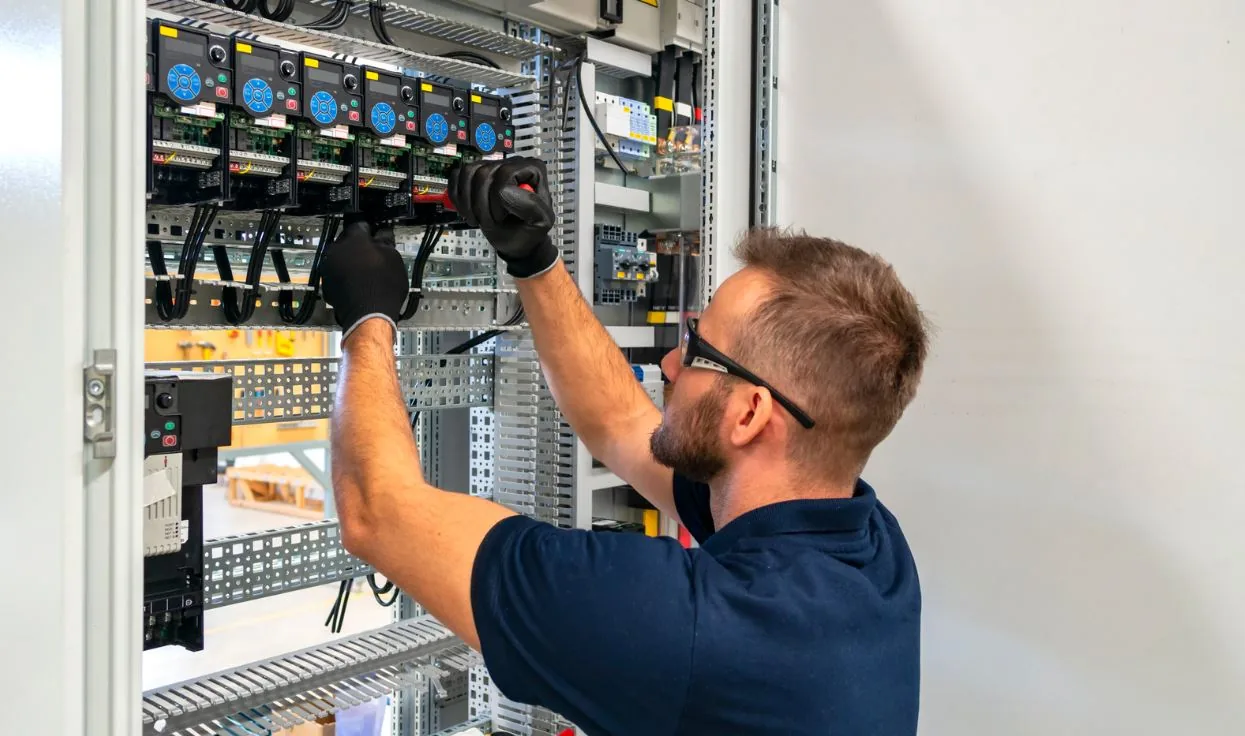
Warmth, buzzing, scorch marks or corrosion at the panel are reasons to stop using the circuit and have it inspected. Repairs at the panel are licensed work.
Diagnosis before replacement
The difference between a repair that holds and one that comes back is the diagnosis. Two homes can show the same symptom — a breaker tripping every evening — and have entirely different causes: one a genuine overload, the other a deteriorating connection inside a junction box.
Work is carried out to the Canadian Electrical Code as adopted in British Columbia. Electrical work of this kind is regulated in BC and permitted work is inspected, which is the homeowner’s protection as much as ours.
If the fault turns out to sit in aluminum branch wiring, an undersized service, or an obsolete panel, we will tell you that plainly rather than repeating a repair that cannot hold.
How a repair visit runs
- 01
Describe the symptom
What fails, when it fails, and what else is running at the time. That detail narrows the search before anyone arrives.
- 02
Isolate the circuit
The affected circuit is identified and made safe so testing can be carried out without risk to the rest of the property.
- 03
Trace the fault
Testing works back from the symptom to the cause: the connection, device or run that is actually failing.
- 04
Repair to code
The fault is repaired using correctly rated materials, with permits and inspection where the work requires them.
- 05
Verify and explain
The circuit is tested under load and you are told what failed and why, so you know whether anything else needs attention.
FAQs
How do I know whether it is a repair or a panel upgrade?
If a single circuit misbehaves and the rest of the home is fine, it is usually a repair. If breakers trip across several circuits, the panel runs warm, or you cannot add capacity for an appliance or EV charger, the service itself may be the limit rather than any one circuit. Diagnosis tells you which, and we would rather establish that before you pay for a repair that cannot solve a capacity problem.
Is a permit required for electrical repair in British Columbia?
Electrical work in BC is regulated and permitted work is inspected. Like-for-like replacement of a device is treated differently from alterations to circuits or to the service. As a licensed contractor we take out the permits the work requires. Be cautious of anyone offering to skip that step, because uninspected work can surface later during a sale or an insurance claim.
Why does my breaker keep tripping even after it was replaced?
Because the breaker was doing its job. A breaker trips in response to a condition on the circuit, so replacing the breaker without finding that condition simply installs a new device that will trip for the same reason. The cause is normally an overload, a short, or a deteriorating connection somewhere on the run.
Can you repair aluminum wiring rather than rewire the house?
In many homes the answer is remediation at the connections rather than a full rewire, which is why we treat aluminum wiring as its own service. What is appropriate depends on the condition of the connections and the devices they land on, and that has to be assessed rather than assumed.
What should I do before you arrive?
If a circuit is sparking, smoking, scorched or hot to the touch, switch it off at the panel and stop using it. Otherwise leave things as they are: a fault you can still reproduce is far easier to trace than one that has been disturbed. Note when it happens and what is running at the time.
Do you repair commercial electrical systems as well?
Yes. Commercial work runs alongside our residential service and covers distribution, lighting and equipment circuits. The diagnostic approach is the same; the difference is usually scheduling around the operating hours of the business.
Powering Your Future—Fill Up the Form Below!
Tell us what is happening and a licensed Elpro electrician will get back to you.
Call 604-512-2207